How To Use This Web Site
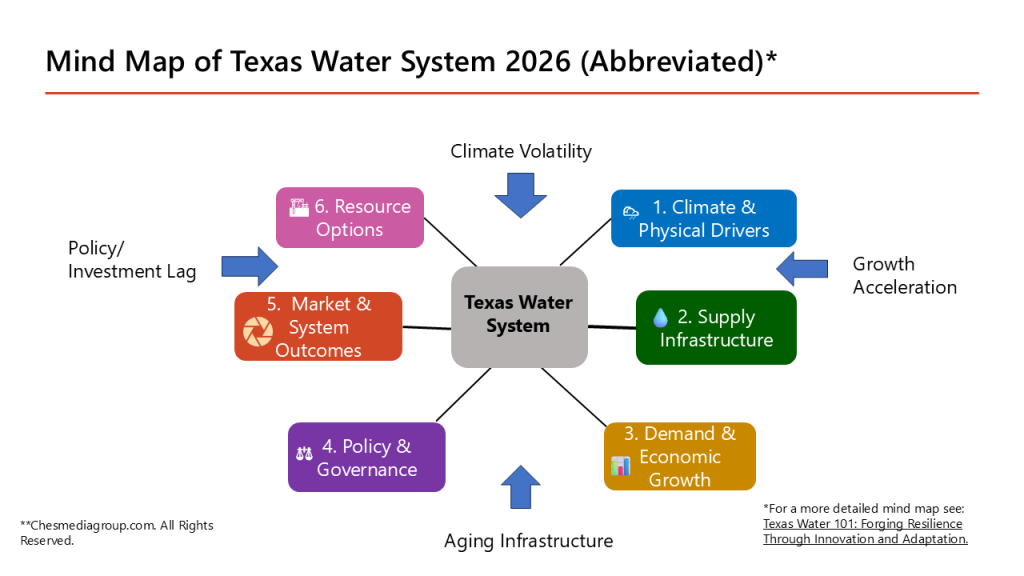
Texas water issues are interconnected. This site organizes developments into major system drivers so readers can understand not just individual events — but how they fit into the larger Texas water system. Texas water challenges cannot be understood through isolated events such as droughts, infrastructure projects, or legislative actions alone. They are the result of interconnected forces — climate variability, population growth, infrastructure constraints, economics, and public policy — operating simultaneously.
Understanding the Texas Water Challenge
Texas water is no longer simply a resource issue — it is a systems challenge shaped by climate, population growth, economics, infrastructure, and public policy.
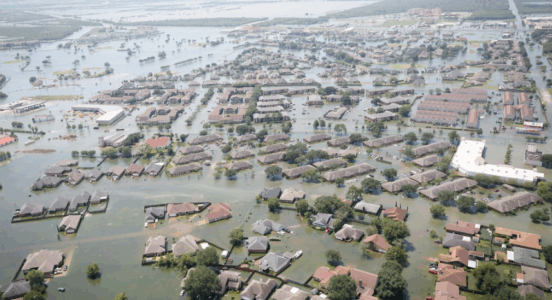
Multiple forces are converging at once. Some are beyond human control, including long-term climate variability and recurring cycles such as El Niño and La Niña that intensify both droughts and flash flooding. These physical realities place increasing stress on water availability across the state.
At the same time, groundwater withdrawals in many regions are exceeding natural recharge rates. This imbalance contributes to aquifer depletion, land subsidence, and growing competition among municipal, agricultural, industrial, and emerging technology users. The result is not a single problem, but an interconnected system under pressure.
Growth, Economics, and Rising Demand
Texas’ strong economic expansion continues to attract population growth, new industry, and large-scale infrastructure investment. While this growth fuels prosperity, it also accelerates water demand and increases operational and capital pressures on utilities and regional water providers.
Water pricing, infrastructure investment, recycling, and system optimization are becoming central economic issues — not just environmental ones. Utilities and districts must adapt quickly to manage rising costs while maintaining reliability and long-term resilience.
Structural Change in Water Use
Competition for water is reshaping allocation decisions across sectors. Agriculture, municipalities, and advanced technology industries increasingly compete for limited supply, driving structural changes in access, pricing, and long-term planning priorities.
Recent state initiatives — including a $20 billion funding program supported by sales tax revenues — represent important progress. However, many analysts recognize that significantly that the average investment of $1 billion per year will require much more investment and a wide range of physical and analytical solutions with improved planning coordination to meet future supply risks to meet Texas’ economic growth and quality of life.
From Conservation to Advanced Supply Solutions
Future solutions will range from low-cost measures such as conservation, leak detection, and operational efficiency improvements to major capital investments including desalination, water reuse, and recovery systems. These options can be evaluated along a supply-cost curve to prioritize projects based on cost, impact, and resilience benefits.
The Need for Systems-Level Thinking
Addressing Texas water challenges requires more than individual projects. It requires:
- transparent project evaluation and ranking
- improved data collection and analysis
- stronger coordination among stakeholders
- regional collaboration and strategic consolidation where appropriate
Better decisions emerge when policymakers, utilities, businesses, and communities share a common understanding of how the entire water system functions.
Why This Site Exists
TexasWater101.com provides analysis, research, and ongoing insights into Texas water trends, policies, and investment decisions. The goal is to help stakeholders better understand risks, evaluate solutions, and support informed economic and infrastructure choices shaping the future of Texas water.
- On this site you will find:
- Regional water trend analysis
- Policy and funding developments
- Infrastructure project insights
- Data-driven research summaries
- Systems-level commentary on Texas water markets